Just Another Perimenopausal Elder Millennial Going Down the ADHD Rabbit Hole
Why becoming a student of yourself in midlife is key. Your over-functioning doesn't quite hit the same as it did a decade ago.

I am standing in my bathroom mirror, twenty minutes before I need to leave for a networking event, watching my silk press give up on me in real time.
The humidity got it. What was sleek and intentional this morning has expanded into something I can only describe as a soft, indignant halo. It’s not terrible, but also not the polished, put-together version of myself I was counting on to walk into a room full of potential clients and make them believe, without question, that I was worth hiring. I stand there looking at my reflection and feel the familiar verdict forming, the one I’ve heard so many times I should have it memorized by now: You don’t look presentable, therefore you can’t go.
So I don’t go. And then, predictably, I spiral.
I have run this particular cycle so many times that I should have been able to set a watch to it. The hair, or the outfit, or the shoes that didn’t match the bag, or the sudden and specific fatigue that arrives precisely when I need to show up — and any one of these things, small on its own, would compound into a reason to cancel. Then came the guilt. Then the depression about the guilt. Then the vague, gnawing feeling that I had once again gotten in my own way.
For years, I called this bad luck. I called it anxiety or being prone to depression. I called it being overwhelmed. What I never called it was what it actually was: data I had refused to use.
Because I knew my patterns. My hair frizzes on the second day of the silk press unless it’s winter and the air is dry and cold. I knew that rushed mornings activate the old verdict. I had all of this information as I had been collecting it, passively, for decades. I just hadn’t made it useful or built any routines around it.
I kept showing up to the same situations unprepared and genuinely, inexplicably surprised by the same results.
At some point in the last few years, I stopped negotiating with my patterns and started engineering around them. If my hair frizzes on day two, I keep a headwrap I love near the door, or I opt for a natural style. If I have an event coming up and I know that not having the right outfit tends to derail me, I stop leaving it to chance and build a capsule of things I can throw on at a moment’s notice and feel good. If I always feel more tired by the idea of something than by the thing itself, I stop waiting until I feel ready and I build in arrival conditions instead.
This is what I mean when I talk about in The Rest Revolution about becoming a student of yourself. The discipline of taking what you actually know about yourself — your patterns, your limits, your particular brand of sabotage — and designing your life to work with them rather than defaulting, again and again, to everyone else’s rhythm.
Here is what I know to be true about the forties specifically: this is when it all catches up. The years of self-betrayal, the decades of contorting yourself to fit spaces not built for you, and the long habit of making your own needs an afterthought eventually presents its bill.
For many of us, burnout is the accumulated cost of having ignored our own data for a very long time. If you are reading this and you’ve hit a similar wall of running the same cycles and calling it bad luck, I want to ask you gently: what aren’t you giving yourself that you actually need?
What knowledge of yourself have you had for years, that you keep refusing to use?
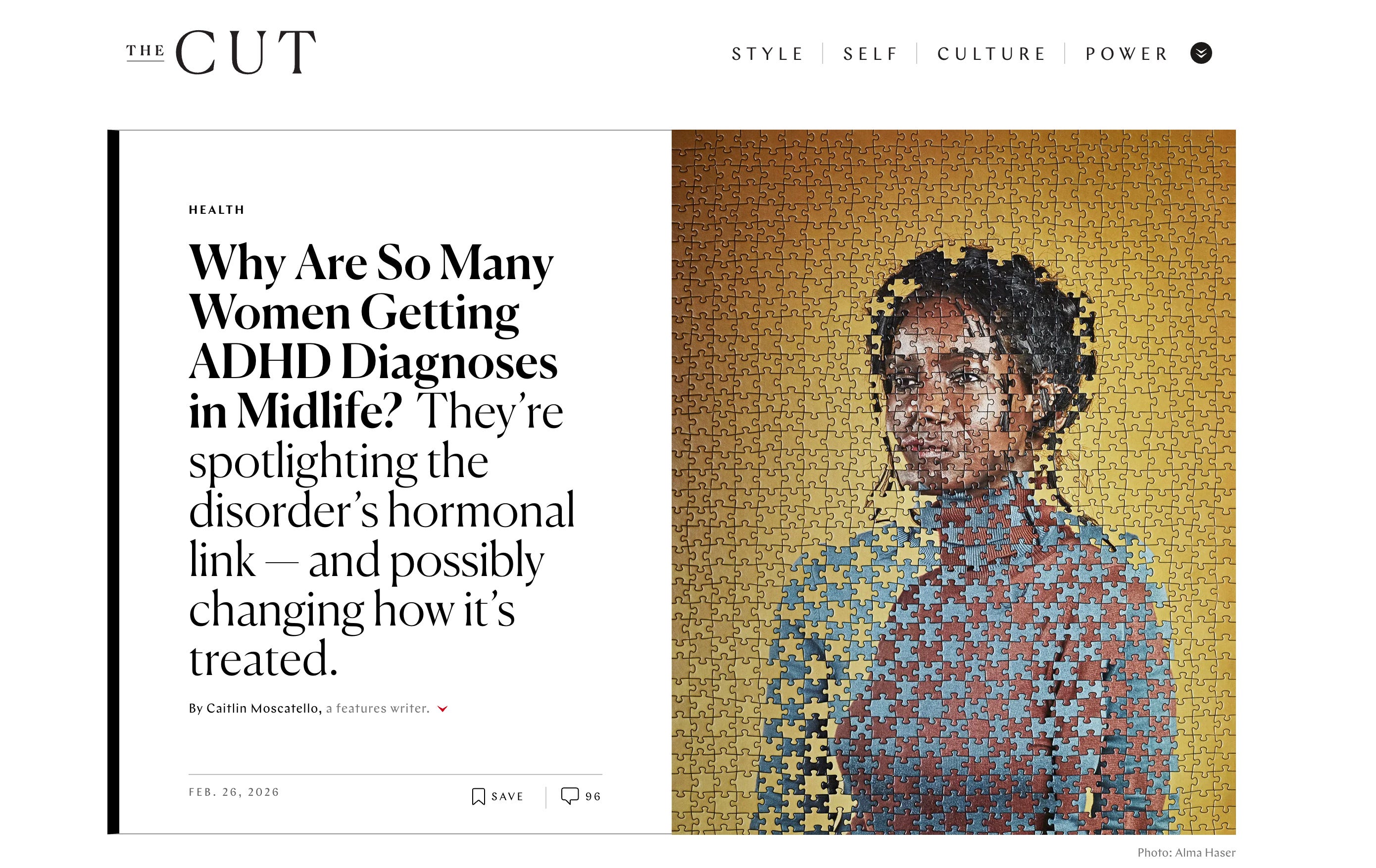
There is an additional layer worth naming, one that I am still turning over in my own mind. I read a piece in The Cut recently — “They Thought It Was Burnout or Aging. It Was ADHD” — and it struck a very tender nerve.
I don’t have a formal diagnosis.
What I have is one kid with diagnosed ADHD, one whose symptoms aren’t as severe but are definitely there, and a 5-year-old who is more hyperactive and fidgety than her diagnosed brother was at her age. I have a house full of people who share the same kind of creativity, the same tendency to hyperfocus and then disappear, the same gift for music. It’s nothing for one of us to spontaneously burst into song before all the others chime in, adding our own harmonies and ad-libs to the originator’s nonsensical lyrics.
I’ve gone down enough Instagram rabbit holes to have my suspicions about myself. What I know is that for women who are neurodivergent, whether they have the paperwork or not, midlife and perimenopause don’t just bring the usual turbulence. As estrogen declines, the brain’s ability to regulate dopamine weakens, and the same adrenaline that once helped you push through begins to flood the nervous system instead. The urgency and the overfunctioning that were once the coping mechanisms that carried you through your twenties and thirties stop working, sometimes all at once.
At this age, overfunctioning leads to burnout instead of brilliance.
ADHD, autism, anxiety, or depression that may have been considered subclinical or manageable can leave middle-aged women wondering why their brains suddenly feel like they’re working against them. If that’s you, you’re not alone. Your biology is finally rebelling against your self-sacrificing. This makes the work of becoming a student of yourself an essential midlife survival skill.
Because if you’re a woman of a certain age like me, the specific time and place you were reared in left its mark.
You’ve probably learned to gaslight yourself constantly. You’ve called your own needs unreasonable and picked up unkind labels to describe yourself. You’ve tried to borrow other people’s labels and prescriptions — their morning routines, their systems, their ways of being — because they have the degrees or the revenue, or the picture-perfect life that you don’t, and you decide that makes them more of an expert on you than you are on yourself.
But no one has been inside your specific life, body, or specific exhaustion as long as you have.
It’s time to take the hard-won knowledge you have about yourself and finally put it to use for you.
Introducing: The Sanctuary
A true rest revolution starts from within in moments of intentional stillness.
To help you find stillness anytime, I’ve created an accessible way for you to tap into my soundbaths on the go.
The Sanctuary is a new curated library of soundbaths and somatic work, bridging the gap between the studio experience and your private space.
Designed for those who seek both short moments of restoration (think, a guided breathing exercise before a stressful meeting) and the gift of deep rest (a soundbath to lull you gently to sleep), this growing collection is available exclusively to our paid community.
Join us to explore the power of sound and somatic healing.